
How to Launch an AI Avatar Pilot: A Practical Guide for Businesses


How can your business test an AI avatar before a wider rollout?
Launching an AI avatar pilot starts with a business question: can a visible, conversational guide help a particular audience complete a particular task? The first trial should give you evidence about that question. It should also reveal the knowledge, technical setup and day-to-day ownership needed to keep the experience useful after the initial demonstration.
This guide outlines a practical sequence for businesses evaluating an AI avatar: define a narrow scope, prepare reliable knowledge, choose a channel, plan handoffs, test with representative users and review the results. The examples are planning suggestions, not guaranteed performance targets or customer results. You can use the steps to prepare a brief for an internal team or a delivery partner before committing to a larger implementation.
Table of Contents
1. Choose one audience and one useful task

An AI avatar pilot is a limited trial of a digital character that helps people complete a defined task. Its purpose is to establish whether the experience is useful, accurate and manageable before you invest in a wider rollout. A convincing demonstration is a starting point; a pilot needs representative users, agreed boundaries and an owner who can act on the findings.
Begin with a sentence such as: “Help first-time visitors find the right product setup guide.” This is easier to evaluate than “transform customer experience.” Choose questions that occur frequently, have reliable answers and lead to a clear next step. For an employee onboarding avatar, that might mean finding an approved checklist rather than interpreting an employment policy.
Write down what the avatar will not do. A support pilot could explain published instructions but exclude account changes, payments and individual eligibility decisions. Agree who can approve changes and who can pause the trial. Keep the existing support route available so visitors are not forced into an experimental experience.
Your first deliverable should be a one-page brief covering the audience, task, channel, knowledge owner, exclusions and review criteria. If you are evaluating conversational AI avatars, specify whether you need live questions and answers, a guided conversation or a prepared presentation; these are different experiences with different testing needs.
2. Prepare approved knowledge before designing conversations

Collect the information the avatar needs to answer the chosen questions. Start with a small, reviewed set of product instructions, service descriptions and frequently asked questions. Remove outdated versions, resolve contradictory statements and identify the person responsible for each source. More documents do not automatically create better answers.
For each important question, record the expected answer, the source supporting it and the appropriate next step. Include realistic wording: a customer may say “I cannot get started” rather than use your internal product terminology. A useful test set also includes incomplete questions, spelling mistakes, unsupported requests and questions that require clarification.
Prepare a clear response for missing information. The avatar should acknowledge the limit and offer the agreed support route instead of inventing an answer. Explain when the experience uses AI, and decide what conversation information is actually needed for the pilot. Review collection, access and retention arrangements with the people responsible for them.
The AI knowledge base guide provides a practical starting point for organizing this material. Before launch, have a subject-matter expert review both the source documents and a sample of generated answers. A correct source can still be summarized badly, so the output needs its own review.
3. Select the channel and make the experience usable
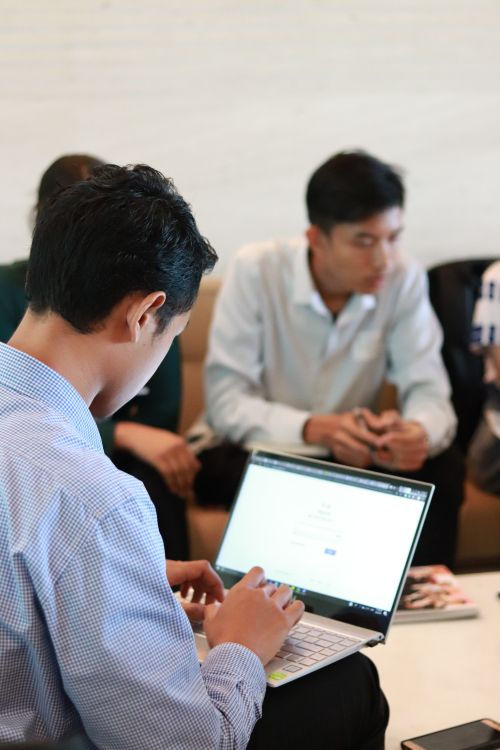
Choose the place where your target audience already tries to complete the task. A website pilot can test product discovery or basic support. An internal application may suit employee guidance. A physical kiosk introduces additional questions about sound, screen position, connectivity and the surrounding environment. Start with one channel so you can understand the results.
Test on representative devices rather than only on the presentation laptop. Check whether visitors can start, stop and understand the interaction. If voice is part of the experience, test microphone permission prompts, background noise and what happens when someone cannot or does not want to speak. Confirm the supported text alternative before making it part of the brief.
Accessibility and basic usability belong in the first trial. Review keyboard operation, readable text, captions where relevant, visible controls and the ability to reach another support route. Observe real users attempting the task without coaching. If they spend their time discovering how to interact, improve the interface before judging answer quality.
A planned AI avatar kiosk needs testing in its intended physical setting, not just a browser preview. For a custom application, review the AI Avatar API requirements with the implementation team. Do not assume a feature shown in a demonstration is included in every deployment.
4. Define integrations and the human handoff

Decide whether the pilot only explains information or also performs actions. Linking to an approved setup guide is different from reading an order, changing a booking or creating a support ticket. Each connected action needs a confirmed integration, suitable permissions and a tested response when the system is unavailable.
For a first pilot, consider limiting the experience to information and guided next steps. This can answer an important business question without adding every operational dependency at once. If an action is essential to the trial, specify exactly what data it needs, who is authorized to request it and how the outcome will be confirmed.
Design handoff as part of the normal conversation. Define the triggers: an unsupported question, repeated misunderstanding, a request for a person or a task outside scope. State what visitors should expect next, including whether the destination is a contact form, support page or an available human agent. Do not promise an immediate connection if the workflow cannot provide one.
An AI customer service avatar should make the route to help clearer. Test the handoff destination itself, including mobile behavior and unavailable-service conditions. A fluent response that sends someone to a broken link or an unmonitored channel has not completed the support task.
5. Run a controlled test with clear success criteria

Agree the evaluation method before inviting users. Choose a few measures tied to the task: whether the answer is supported by approved information, whether the user reaches the intended next step, how long the task takes and whether the handoff works. Record the current process as a baseline so you have something meaningful to compare.
Use the same representative questions for the baseline and avatar experience where practical. Ask a reviewer to score answers using written criteria, and keep the sample size visible beside every percentage. Ten successful sessions can reveal useful issues, but they are not enough to claim reliable performance across a large customer population.
Review unsuccessful sessions as carefully as successful ones. Separate knowledge gaps, misunderstood questions, slow responses, interface confusion and integration failures. Each needs a different fix. Include tests where the correct behavior is to decline, clarify or hand off; measuring only answered questions can reward the wrong behavior.
An illustrative pilot brief could read: “Help new website visitors locate setup guidance using approved public documentation. Exclude account changes. Test common questions and unsupported requests on desktop and mobile. Review incorrect answers and failed handoffs before increasing exposure.” This is a planning example, not a Mimic Minds customer case study or a promised outcome.
Set launch gates that fit the consequences of mistakes. For example, require every critical handoff test to reach the agreed destination and block expansion while a known high-impact answer remains incorrect. Keep an issue log with an owner and retest date. Small, documented releases make it easier to see whether a change actually improved the experience.
Keep a simple launch checklist: approved sources are current; the agreed questions have been tested; unsupported requests reach the right fallback; links work; representative devices are covered; the pause procedure has an owner; and reviewers know where to record problems. Confirm these items before inviting a wider audience. A checklist does not replace judgment, but it prevents a polished demonstration from hiding an unfinished operational detail.
6. Review costs, ownership and the decision to expand

A pilot should end with a decision: expand, revise and retest, or stop. Review the evidence against the original task rather than judging success by how impressive the avatar looks. Keep user feedback, answer-review results, task outcomes and operational effort together so the decision reflects the complete experience.
Include ongoing work in the cost review. Someone must maintain knowledge, review problems, manage integrations and respond when the experience fails. Usage, hosting, character production, voice, languages and support arrangements may affect the scope and price. Use the AI avatar cost guide to prepare questions, then request a quote for the specific brief.
There is no single reliable launch timeline for every AI avatar pilot. A limited informational trial and a production integration have different dependencies. Build a schedule around approved knowledge, available reviewers, channel setup, integration testing and sign-off. Do not set a public launch date until the team has confirmed these inputs.
If the evidence supports expansion, add one meaningful variable at a time: a new audience, knowledge area, channel or action. Keep the previous test set and add cases for the new scope. For a broader enterprise deployment, assign a service owner and agree how updates, incidents and performance reviews will be handled after the launch.
Frequently asked questions
What is an AI avatar pilot?
An AI avatar pilot is a limited trial of a digital character for a defined audience and task. It tests usefulness, answer quality, usability and operational requirements before a wider rollout.
What is a good first use case for an AI avatar?
Choose a frequent, clearly defined task with approved answers and an obvious next step, such as helping visitors find setup guidance. Avoid combining several departments, channels and sensitive actions in the first trial.
How long does it take to launch an AI avatar pilot?
The timeline depends on knowledge readiness, channel setup, review availability and integrations. Agree milestones for preparation, testing and sign-off with the delivery team rather than assuming a fixed launch period.
Do we need a CRM integration for the first pilot?
Not necessarily. An informational pilot can explain approved content and direct users to existing resources. Reading or changing customer records requires separately confirmed integrations, permissions and testing.
How should we measure an AI avatar pilot?
Measure answer quality, task completion, time to the intended next step and handoff reliability against a baseline. Record the sample size, review failures and agree acceptance criteria before testing.
What should the avatar do when it does not know an answer?
It should acknowledge the limit, ask for clarification when useful and offer the agreed support route. Test these situations explicitly instead of encouraging it to answer every question.
Can the same pilot run on a website and a kiosk?
A deployment may support multiple channels, but each needs its own usability and technical testing. Start with one channel and confirm device, audio, connectivity and accessibility requirements before expanding.
What should we prepare before contacting Mimic Minds?
Prepare the target audience, one priority task, approved knowledge, intended channel, integration requirements and success criteria. Identify a knowledge owner and a reviewer who can approve the pilot scope.
Conclusion
A useful AI avatar pilot makes the next decision easier. It shows which questions the experience handles well, where people need help and what it takes to maintain reliable answers. Start with one task, make the limits clear and use the findings to improve the next version.
Before your first scoping discussion, gather the approved source material, a short list of representative questions, the current support route and the names of the people who will review the experience. These inputs help turn a general idea into a project that can be tested and priced against a defined scope.
Discuss your AI avatar pilot with Mimic Minds to review the audience, channel, knowledge requirements and next steps for your business.


Comments