_edited.png)
3D Avatars in the Metaverse: What Brands Need to Know About Metaverse Avatar
- Mimic Minds
- Nov 11, 2025
- 5 min read
Updated: Jan 19

As the digital world evolves, brands are discovering that their online presence must go far beyond websites and social media profiles. The Metaverse—a shared, persistent digital universe—has become the new frontier for interaction, commerce, and storytelling. At the heart of this transformation lies the Metaverse Avatar, a 3D digital persona that represents individuals, customers, and even companies in immersive virtual environments.
These avatars are no longer mere game characters. They’re brand ambassadors, virtual employees, customer service agents, and digital influencers. For brands seeking to create meaningful experiences, 3D avatars offer an unprecedented opportunity to engage audiences in deeply personal and interactive ways.
In this guide, we’ll explore what Metaverse Avatars are, why they matter, how brands can use them effectively, and what the future holds for avatar-driven digital interactions.
Table of Contents
What Is a Metaverse Avatar?

A Metaverse Avatar is a digital 3D representation of a person, brand, or entity within a virtual environment. These avatars are interactive and customizable, often powered by AI to express realistic motion, emotion, and voice.
In simple terms, your Metaverse Avatar is your digital identity in the virtual world. For brands, it can be a mascot, a spokesperson, or even a virtual employee capable of interacting with customers.
Key characteristics of a Metaverse Avatar include:
Personalization: Tailored appearance, clothing, and behavior that reflect real-world or fantasy identities.
Interactivity: Ability to communicate, move, and react in real time.
AI Integration: Intelligent responses and natural conversations using AI-driven technology.
Cross-platform compatibility: Usable across different Metaverse platforms and virtual worlds.
Why 3D Avatars Matter for Brands
The Metaverse Avatar is more than a novelty—it’s a new marketing and engagement channel. In the immersive environments of the Metaverse, customers don’t just see a brand; they interact with it.
Reasons brands should invest in avatars:
Enhanced Brand Presence: A living, breathing avatar can act as the brand’s personality in digital spaces.
Deeper Engagement: Users connect emotionally with avatars more than static ads or text.
24/7 Representation: AI-driven avatars can engage customers continuously.
Cost-effective Interaction: Virtual ambassadors can handle large-scale interactions without logistical costs.
Personalization at Scale: Each customer can have a unique, conversational experience.
Learn more about AI-powered branding with AI avatars for personal branding.
How Metaverse Avatars Are Created
Building a Metaverse Avatar combines artistry, motion capture, and AI technology. Brands like Mimic Minds specialize in developing lifelike avatars that bridge realism and imagination.
The process typically involves:
Concept Design: Creating a visual identity aligned with the brand’s tone and audience.
3D Modeling: Using tools like Blender, Unreal Engine, or Maya to sculpt the avatar.
Rigging and Animation: Adding skeletal systems and realistic movements (often powered by motion capture).
AI Integration: Enabling speech, emotion, and personality through conversational AI.
Deployment: Integrating the avatar into the Metaverse or virtual experience.
For example, AI Host Avatars are revolutionizing events and virtual conferences. Explore how in AI Host Avatar for Events.
Metaverse Avatar Platforms and Technologies
Several major platforms support avatar creation and use:
Platform | Key Features | Ideal Use Case |
Meta Horizon Worlds | Customizable 3D avatars, social experiences | Social networking, community events |
Roblox | Stylized avatars, user-generated content | Gaming and youth engagement |
Decentraland | Blockchain-based avatars | Virtual commerce and NFT-driven interactions |
Unreal Engine Metahuman | Hyper-realistic avatars | Film, corporate presentations, digital doubles |
VRChat | Highly social, user-created avatars | Community building and entertainment |
Technologies like AI, motion capture, and natural language processing make avatars increasingly lifelike and responsive.
Metaverse Avatar vs Traditional Online Identity
Feature | Metaverse Avatar | Traditional Online Identity |
Representation | 3D animated persona | Profile picture or text bio |
Interactivity | Real-time conversation and motion | Static or limited interaction |
Emotional Connection | High (via voice, expression) | Low to moderate |
Brand Engagement | Immersive and experiential | Informational or transactional |
Scalability | Global, automated AI presence | Human-managed responses |
In short, a Metaverse Avatar transforms passive viewing into active engagement.
Applications of Metaverse Avatars Across Industries

3D avatars are reshaping how industries connect with their audiences.
Key sectors adopting avatars:
Entertainment: AI-driven characters enhance storytelling and audience engagement. Explore AI in the entertainment industry.
Gaming: Intelligent NPCs (non-playable characters) powered by AI create immersive worlds — see AI NPCs in gaming.
Fashion: Digital models and virtual try-ons are redefining e-commerce — read AI in fashion.
Customer Support: Virtual agents provide instant, multilingual assistance — check out AI avatars in customer support.
Finance: Personalized financial advisors as avatars enhance trust and accessibility — explore AI for financial services.
Healthcare: Digital medical assistants guide patients virtually — see AI in healthcare industry.
Human Resources: AI-driven avatars streamline recruitment and onboarding — learn about AI in HR.
Education: Conversational AI avatars create immersive learning — explore Conversational AI in education.
Benefits of Using 3D Avatars for Brands
Metaverse Avatars unlock both creative and commercial value:
Authentic Engagement: Realistic avatars make customer interactions more human.
Brand Differentiation: Unique avatars set brands apart in competitive markets.
Cost Efficiency: Automate communication without losing personality.
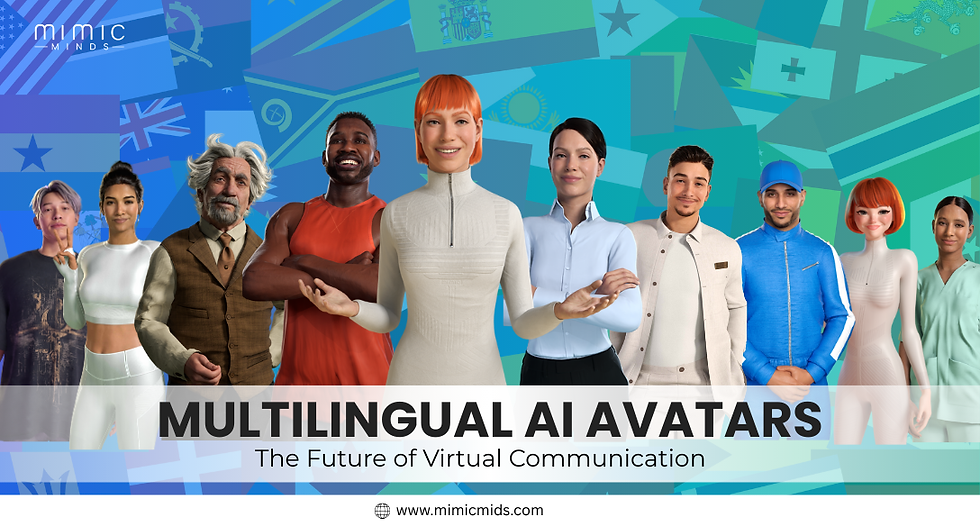
Global Accessibility: Multilingual avatars (see Multilingual AI Avatars) enable worldwide engagement.
Data Insights: Track engagement and sentiment through avatar interactions.
Scalability: Manage thousands of simultaneous user interactions via AI-driven systems.
Challenges of Implementing Metaverse Avatars
Despite the promise, adopting 3D avatars comes with challenges:
Technical Complexity: Requires expertise in 3D design, AI, and motion capture.
Platform Fragmentation: Different Metaverse ecosystems have varying compatibility.
Privacy Concerns: Managing data and identity securely in virtual spaces.
Cultural Sensitivity: Avatars must represent diversity and inclusivity appropriately.
Maintenance: Continuous updates are needed as AI models and user expectations evolve.
Brands that partner with experts like Mimic Minds can navigate these hurdles effectively with tailored avatar development solutions.
Future Outlook: AI, Avatars, and Digital Identity

The convergence of AI, 3D design, and the Metaverse will redefine digital identity in the coming decade. Avatars will evolve from static representations into autonomous digital beings capable of learning, reasoning, and expressing emotion.
Emerging trends:
AI-Driven Realism: Emotional intelligence and lifelike expressions through advanced neural rendering.
Persistent Avatars: Your digital twin continues to act on your behalf even when you’re offline.
Cross-Metaverse Portability: Avatars moving freely between virtual ecosystems.
Virtual Workforce: AI avatars taking on creative, administrative, and service roles.
Metaverse Commerce: Avatars as the face of brands in digital storefronts and experiences.
For an in-depth look at evolving digital interaction, explore The Future of Digital Interaction with Conversational AI Avatars.
FAQs About Metaverse Avatars
1. What is a Metaverse Avatar?
A Metaverse Avatar is a 3D digital persona used to represent individuals or brands in virtual worlds, powered by AI for interaction and realism.
2. How can brands use Metaverse Avatars?
Brands can deploy avatars for marketing, virtual events, customer service, and interactive storytelling.
3. Are Metaverse Avatars powered by AI?
Yes, many modern avatars use AI for speech recognition, emotional intelligence, and personalized engagement.
4. What platforms support Metaverse Avatars?
Popular platforms include Meta Horizon Worlds, Decentraland, Roblox, and Unreal Engine’s Metahuman.
5. What are the benefits of using 3D avatars?
They enable immersive branding, reduce operational costs, and enhance user connection through interactivity.
6. Can avatars speak multiple languages?
Yes — with tools like Multilingual AI Avatars, avatars can communicate in many languages.
7. What are the challenges of avatar implementation?
Technical complexity, privacy, and cross-platform compatibility remain the biggest hurdles.
8. What’s the future of Metaverse Avatars?
Avatars will become increasingly autonomous, hyper-realistic, and integrated across industries as AI continues to advance.
Conclusion
The Metaverse Avatar represents the next step in digital brand evolution—a fusion of technology, personality, and experience. For brands, adopting 3D avatars means more than keeping up with trends; it’s about building meaningful, interactive relationships in the virtual age.
With Mimic Minds’ expertise in AI-driven avatars and digital human creation, companies can seamlessly enter the Metaverse, build lasting engagement, and redefine their presence in the virtual economy.
For further information and in case of queries please contact Press department Mimic Minds: info@mimicminds.com.

Comments