
AI Sales Avatars: Use Cases, Benefits and Implementation

Updated: 7 days ago

What if every inbound lead could speak to a consistent, informed sales expert instantly, any hour, any timezone?
That is the practical promise of an AI sales avatar: an interactive digital human that can greet visitors, ask the right qualification questions, explain features in plain language, and guide prospects into the next step with the same calm precision every time. Unlike a static explainer video or a basic chat widget, a well built virtual sales representative can hold a natural conversation, handle objections, and adapt the demo flow to what the buyer actually cares about.
In modern revenue teams, speed to lead matters, but so does continuity. Prospects want answers before they book a call, and they want those answers framed around their context. This is where an AI avatar for lead generation and a digital human sales assistant can do real work: qualifying intent, capturing requirements, running a tailored product demo, and routing high fit opportunities to humans with richer notes than a form fill ever could.
Table of Contents
Table of Contents
Why sales needs embodied conversational AI now
Sales funnels have not gotten simpler. Buyers arrive educated, impatient, and highly specific. They expect your website to behave like a knowledgeable showroom, not a brochure. An AI sales avatar is essentially a front of house performer powered by conversational intelligence, designed to turn anonymous traffic into qualified conversations.
What makes this different from a typical chatbot is embodiment and delivery. A digital human communicates with voice, facial cues, pacing, and on-screen presence, which changes how people engage. In practice, that means longer interactions, clearer discovery, and fewer drop offs when buyers need reassurance.
Key buyer moments where a digital human sales assistant fits naturally
Website landings after ad clicks where visitors need fast relevance
Product pages where prospects are comparing alternatives
Pricing pages where objections show up early
Event pages where attendees want a quick guided overview
Support-heavy products where pre-sales education reduces churn later
If you are building these experiences as a brand system, a dedicated platform matters. Many teams start with a pilot using a controlled studio workflow, then scale out to multiple pages, languages, and products. This is exactly where Mimic AI Studio fits into an enterprise ready content and deployment pipeline: one place to build, test, and iterate digital humans with consistent presentation and governance.
How digital humans qualify leads with intent, not forms

Lead qualification is not collecting data. It is uncovering intent, urgency, constraints, and decision structure. A form can capture a name and company. It cannot detect confusion, hesitation, or hidden objections. A sales focused digital human can.
A strong AI sales avatar qualification flow usually includes five layers:
Context capture: The avatar asks what brought the visitor in, then narrows to a use case. This can be framed like a friendly concierge rather than an interrogation.
Fit mapping: It learns the prospect’s team size, deployment environment, integration needs, budget range, and timeline. The goal is not to gatekeep but to route the right next step.
Objection discovery: Instead of waiting for a call, the avatar invites the hard questions early: security, pricing logic, implementation time, data handling, and expected outcomes.
Confidence building: This is where embodiment matters. A well-directed digital human can explain tradeoffs calmly, avoiding overpromises while still being helpful.
Structured handoff: When the prospect is ready, the avatar offers a meeting, a tailored asset, or a direct escalation to a human. The handoff includes a summary of what was discussed.
In a production grade setup, qualification data does not sit in a chat transcript. It becomes structured fields and notes that can route into CRM, marketing automation, or a sales inbox. Many teams implement scoring logic that marks conversations as high intent when certain signals appear: repeated pricing questions, integration readiness, authority cues, or a request for procurement documentation.
Where this becomes especially effective is when the avatar is designed as a business ready agent rather than a novelty character. If your experience needs multiple roles, such as a technical pre sales specialist, a solutions consultant, and a front desk greeter, that architecture aligns closely with how AI agents can be structured across different customer journeys without losing brand consistency.
The rise of the digital human sales assistant marks a significant shift in how businesses engage with prospects. Unlike traditional methods, these avatars combine advanced conversational AI with human-like presence, providing a more relatable and effective interaction. This innovation not only improves lead qualification but also fosters trust, which is essential in the decision-making process.
How an AI product demo avatar runs interactive demos
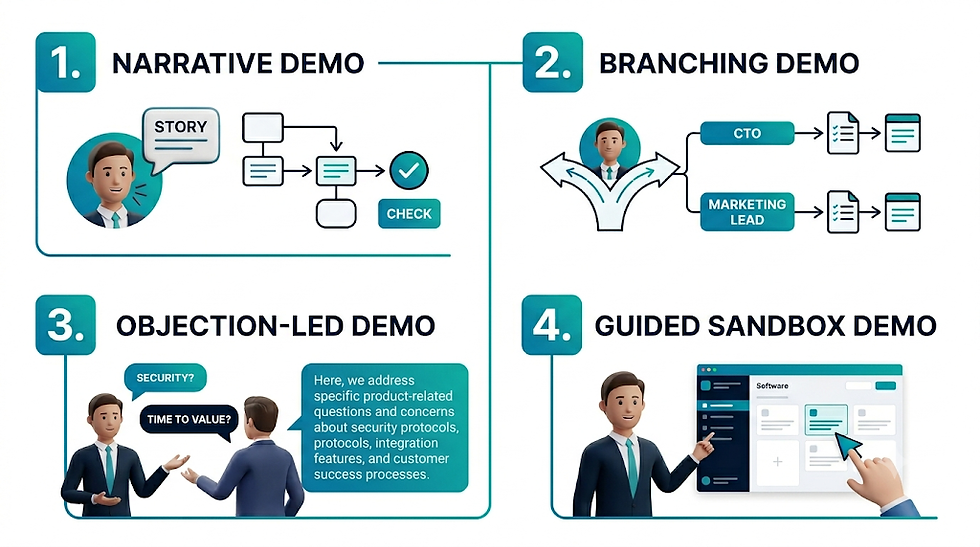
A modern demo is not a slideshow. It is guided exploration. Prospects want to jump to their pain point, see the relevant workflow, and understand how the product behaves in real conditions. An AI product demo avatar can run that experience in a few proven patterns.
Narrative demo: The avatar tells a short story: problem, workflow, result. It is ideal for first-time visitors who need orientation.
Branching demo: The avatar offers choices based on role or industry, then runs the most relevant path. For example, it can speak differently to a CTO versus a marketing lead.
Objection-led demo: The demo starts with the thing the buyer is worried about, such as security or time to value, then shows the product through that lens.
Guided sandbox demo: The avatar explains what to click, what to look for, and why it matters, staying available while the buyer explores.
To do this well, you need more than a talking face. You need a pipeline that blends performance, design, and system intent.
A production realistic workflow looks like this
Character design and brand alignment: Wardrobe, tone, pacing, and on-camera framing are treated like a brand shoot, because they are.
Voice and language direction: Voice is tuned for clarity and trust. The best demos avoid hyperbole and speak like a skilled human presenter.
Knowledge grounding: The avatar’s answers are constrained to approved product knowledge, pricing rules, and policy-safe responses.
Scene and UI choreography: On-screen callouts, product footage, and interactive prompts are timed like a real demo. The avatar acts as the host, not the entire show.
Analytics and iteration: Drop-off points, repeated questions, and conversion moments are reviewed weekly, then the script and logic are refined.
This is also where choosing the right deployment context matters. A sales avatar used for a company wide funnel may need deeper controls, approvals, and integrations. For teams building at scale, AI avatar for business provides a cleaner mental model: the avatar is a revenue team interface, not a marketing gimmick.
Applications Across Industries

Sales is universal, but the tone and demo shape change by industry. The best digital humans feel like they belong in the environment they serve.
Common use cases where an AI avatar for lead generation performs strongly
Retail and commerce: Experiences that guide product selection, compare options, and reduce cart abandonment, especially when paired with an AI avatar for shopping flow that feels like a premium in-store assistant.
B2B SaaS: Websites where inbound traffic needs fast qualification before booking calls.
Manufacturing and industrial technology: Environments where trade show traffic and complex specifications benefit from a guided explainer.
Healthcare solutions: Use cases where clarity, consent, and safe language matter in early education. These experiences align closely with the principles behind AI avatars for healthcare.
Mobility and automotive: Experiences where product configuration and feature walkthroughs drive higher intent, similar to deployments using AI avatars for mobility.
Education and training: Providers that need interactive onboarding, not just documentation, often benefiting from approaches used in AI tutor avatars for education.
Gaming and entertainment: Platforms that want character-driven commerce and community engagement, where experiences similar to AI avatars for gaming can create stronger immersion.
When the deployment involves multiple regions, high traffic, or strict governance, the question becomes less about capability and more about control. That is why teams often move from a single page pilot into an enterprise deployment model through enterprise solutions that support approvals, scalability, and operational consistency.
Benefits

A well designed AI sales avatar does not replace your team. It removes friction so your team can focus on high value conversations.
Practical benefits revenue teams actually measure
Faster response times for inbound visitors, including after hours
Higher lead quality through deeper qualification conversations
More booked meetings from visitors who would not fill forms
Cleaner discovery notes delivered to human reps before the call
Consistent product messaging across pages, regions, and campaigns
Lower cost per qualified lead by automating repetitive early-stage education
Better buyer confidence because objections are handled earlier
More demo consumption because the experience adapts to the visitor
The hidden benefit is brand performance. When the avatar’s tone is crafted like a real presenter, it becomes part of your brand signature. That is why production realism matters: lighting, framing, micro expressions, voice cadence, and interaction pacing all influence whether the buyer trusts the experience.
An effective nsfw conversion funnel requires not just capturing leads but also engaging them in a manner that resonates with their specific needs and preferences. By employing an AI sales avatar, businesses can create tailored interactions that address potential objections and guide prospects through the sales process with confidence. This personalized approach can significantly enhance day-one sales outcomes, making it an invaluable tool for modern sales teams.
Future Outlook
The next phase is not just smarter answers. It is more capable action. Digital humans are moving toward agentic behavior: they can guide a buyer through steps, schedule meetings, fetch tailored assets, and coordinate handoffs without feeling like a rigid menu.
Three trends are shaping the future of the AI sales avatar:
Real-time multimodal understanding: Avatars will interpret intent from text, voice, and on page behavior, not just typed prompts.
Dynamic demo composition: Instead of one fixed demo, the system assembles a demo from approved modules based on role, industry, and objections.
Stronger governance and consent design: As digital humans become more present, the standards for transparency, privacy, and safe communication will rise. Brands that treat consent and policy as first-class design constraints will earn greater trust.
In practice, this means the most valuable systems will be the ones built like production pipelines: character direction, knowledge governance, analytics, and continuous iteration. That studio mindset is what separates a novelty avatar from a reliable sales interface.
FAQs
What is an AI sales avatar in practical terms?
An AI sales avatar is a digital human interface that can converse with prospects, answer product questions, qualify intent, and guide visitors through a demo or next step without requiring a human rep to be present.
How does a digital human qualify leads better than a form?
Forms collect static fields. A digital human sales assistant asks follow up questions, clarifies vague answers, detects objections, and produces a structured summary that reflects buyer intent and readiness.
Can an AI product demo avatar handle complex products?
Yes, when it is grounded in approved product knowledge and designed with branching demo logic. The best experiences combine avatar hosting with visual modules like feature clips, UI walkthroughs, and scenario based examples.
Does an AI sales avatar replace sales reps?
No. It replaces friction and repetition in early stage discovery. It surfaces higher intent opportunities and hands them to humans with better context, which typically improves close rates and rep efficiency.
How do you keep the avatar accurate and safe?
Accuracy comes from knowledge governance: approved content, controlled retrieval, clear refusal behaviors, and analytics driven iteration. Safety comes from consent aware design, privacy controls, and transparent user communication.
What metrics should teams track after launch?
Common metrics include conversation rate, qualified lead rate, booked meetings, drop off points, top questions, demo completion, and assisted pipeline influenced by avatar interactions.
Where should a sales avatar be deployed first?
Most teams start on high intent pages like pricing, product, and comparison pages, then expand to campaigns, events, and partner landing pages once the qualification logic and messaging are stable.
How long does it take to see results?
Results often appear quickly in engagement and meeting lift, but the biggest gains come from iteration: refining qualification questions, improving demo branching, and tuning the avatar’s presentation based on analytics.
Connecting an AI Sales Avatar to a Responsible Sales Process

A sales avatar should support a defined stage such as discovery, product education, qualification or meeting scheduling. It should not create pressure by pretending to be a person or making claims outside approved material.
Connect product, pricing and availability information to maintained sources. The avatar should confirm important conditions, record consent and route complex commercial, technical or contractual questions to the appropriate employee.
Qualification should use transparent questions related to the buyer’s stated need. Avoid sensitive inference, hidden scoring or exclusion based on characteristics unrelated to the product.
Measure qualified opportunities, meeting quality, buyer comprehension, correction and handoff. Conversion is meaningful only when expectations remain accurate and the sales team receives useful context.
Practical Takeaways
Assign the avatar to a defined sales stage.
Use current approved commercial information.
Qualify transparently and avoid sensitive inference.
Measure opportunity quality and handoff.
Related Mimic Minds Resources
Conclusion
An AI sales avatar is not a gimmick. It is a new kind of interface for revenue: a digital human that can qualify leads with nuance, run product demos with clarity, and keep your best human time reserved for the deals that deserve it.
When built with a production mindset, character direction, controlled knowledge, and measurable workflows, the experience feels less like automation and more like a confident host guiding the buyer. That is the real shift: from static pages to living conversations, where qualification and demos happen naturally, at the speed modern buyers expect.
For further information and in case of queries please contact Press department Mimic Minds: info@mimicminds.com


Comments