
AI News Anchors: Uses, Benefits and Media Applications

Updated: 6 days ago

What happens when your newsroom gains a presenter who never tires, never misses a script change, and can go live in ten languages before breakfast?
That question is no longer theoretical. The AI Anchor is quickly becoming a practical tool in modern media operations, especially where speed, scale, and consistent delivery matter. But the real story is not “robots replacing humans.” The real story is workflow design: how a virtual presenter fits into editorial standards, brand identity, broadcast craft, and public trust.
At Mimic Minds, we look at the AI news anchor through a production lens. A believable on-screen anchor is not just a face and a voice. It is performance, timing, camera language, lighting, audio texture, phrasing, and the invisible layer that matters most: governance. That human-first, consent aware approach is a core requirement in our content and deployment philosophy.
Table of Contents
What an AI Anchor Actually Is

In media terms, an AI Anchor is a digital presenter designed to deliver scripted or dynamic content as if it were being read by a human anchor. The best versions feel like broadcast talent because they borrow from broadcast grammar: cadence, pauses, emphasis, and a controlled emotional range.
Under the hood, this “anchor” is usually a combination of:
A digital human or stylized avatar built for camera
Voice performance driven by text to speech, voice cloning, or studio recorded voice libraries
Lip sync and facial motion driven by audio analysis or performance capture
A rendering layer, either real-time for rapid turnaround or offline for premium fidelity
A publishing layer connected to teleprompter style scripts, rundown systems, or CMS workflows
The distinction matters. A virtual presenter can be:
Pre rendered, best for daily explainers and scheduled bulletins
Real-time conversational, best for interactive kiosks, live Q and A formats, and audience engagement
Hybrid, where the face is consistent but the delivery mode changes based on context
When teams say they want an AI news anchor, they often want three outcomes:
Speed to publish
Consistent brand delivery
Multi format distribution across web, mobile, and in venue screens
The best result comes from treating the character like a performer and the system like a broadcast pipeline.
Why Media Companies Are Adopting Virtual Presenters Now

The adoption curve is being driven by pressure that traditional teams feel every day. Media output has expanded, but attention has fragmented. That means you need more versions of the same story, delivered in more formats, faster.
Here is what is pushing the trend:
Short cycle news products need fast voice and video versions for social distribution
Global publishers need language localization that does not break tone and pacing
Regional networks want on demand updates without re booking a studio slot
Sports and finance channels want frequent refreshes as numbers and results change
Brands and corporate media teams are building newsroom style internal channels
This is where an AI Anchor earns its keep. Not as a replacement for journalism, but as a scalable delivery system for editorially approved content.
If you want to see how this scales across different organization sizes, our AI avatars for business approach is built around deployment realities: brand consistency, team access, approvals, and repeatable content operations.
How an AI News Anchor Is Built From Pipeline to Playback

A believable anchor is a craft object. You cannot separate “AI” from production if you want on-screen credibility. Below is the practical pipeline we use when designing a news style digital presenter.
1 Identity and character design
News is a trust format. That means the character must feel stable and intentional.
Wardrobe and grooming are designed for repeated appearances
Facial proportions are tuned to avoid uncanny micro movements
Eye line and head motion are constrained to match studio camera language
The character is tested under harsh lighting and compression, because real news video is rarely pristine
2 Voice and delivery profile
The voice is where audiences decide if they believe the anchor.
Tone is defined by brand and format: breaking news, explainer, interview, recap
Pronunciation is tuned for place names, political terms, sports rosters, and local language nuance
Pacing is calibrated to typical broadcast time codes and lower third readability
Emotion is controlled, because over expressive delivery destroys credibility
3 Script and editorial integration
An AI Anchor should never be a free roaming generator inside a newsroom. It should be a performer for approved scripts.
Editorial teams write or approve the script
The system enforces versioning and approvals
Outputs are tagged with date, author, and source references
Disclosures are standardized for transparency
This is where governance becomes non negotiable, and it aligns with our internal standards for human-first AI communication and trust centered deployment.
4 Facial performance and lip sync
There are multiple valid approaches:
Audio driven facial animation for speed
Performance capture for premium realism and subtlety
Blendshape control tuned for news delivery, not cinematic exaggeration
In broadcast, the job is clarity. Subtle is better than dramatic.
5 Rendering and packaging
You choose the render path based on distribution.
Real-time rendering for rapid updates, live segments, and interactive formats
Offline rendering for high fidelity intros, premium studio pieces, and hero content
Template based lower thirds and brand packs for consistency across episodes
If you want a studio centered approach to building and managing these outputs, Mimic AI Studio is designed to help teams produce repeatable avatar content without reinventing the pipeline each time.
6 Distribution across platforms
A single story now has multiple destinations:
YouTube and social cuts
App video feeds
Website embeds
In venue signage
Internal corporate channels
The AI Anchor becomes a consistent “face” across these surfaces, which is why identity and tone control matter as much as the tech.
Editorial Integrity, Disclosure, Consent, and Risk Controls

News formats carry a special duty. If the audience feels misled, the entire system fails.
A professional deployment usually includes:
Clear disclosure that the presenter is synthetic, placed in a visible and consistent way
Strict separation between editorial approval and automated generation
Consent based likeness policy, especially if any human is referenced or replicated
A documented voice and face ownership model
Watermarking or provenance metadata when appropriate
Human review gates for sensitive topics
This is also why enterprise governance matters. For larger orgs, enterprise deployments typically require access controls, audit logs, and role based publishing so the avatar cannot become an unmanaged distribution channel.
Choosing the Right Approach
Approach Best for Strengths Tradeoffs
Human anchor only Flagship live shows, high trust interviews Authentic presence, improvisation, deep context Higher production cost, limited scaling, schedule constraints
Pre rendered AI Anchor Daily briefings, explainers, localized versions High consistency, predictable quality, fast turnaround Less flexible for true live moments
Real-time AI news anchor Interactive kiosks, live Q and A, event hosting Responsive, engaging, adaptable across languages Requires stronger governance and real-time reliability
Hybrid anchor workflow Newsrooms balancing scale and premium craft Flexible, optimized for multiple platforms More systems design, needs clear runbooks
Applications Across Industries

News style presentation is not limited to journalism. The “anchor format” is simply a proven way to deliver information with clarity and structure.
Common applications include:
Corporate communications, CEO updates, internal announcements
Sports highlights and commentary recaps
Financial market summaries and product announcements
Event hosting and stage intro segments
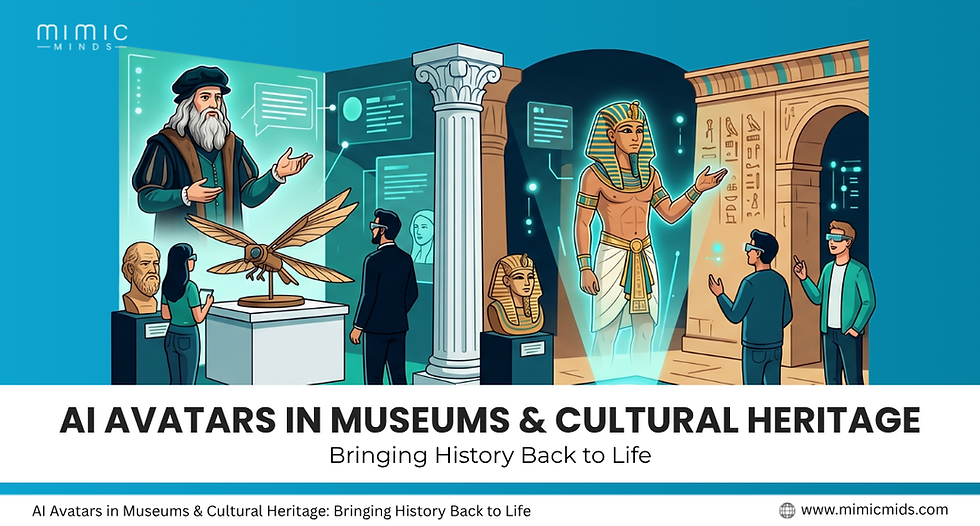
Museum and cultural storytelling as guided narration
Education briefings and lesson summaries
Retail and product explainers with consistent messaging
Because our work spans multiple verticals, the easiest way to map use cases is to explore industries we support and match the anchor format to audience expectations and distribution constraints.
Benefits

When the system is built responsibly, the value is concrete, not abstract.
Key benefits teams typically see:
Faster publishing cycles for video news content
Multi language delivery without re shooting an entire segment
Consistent on brand tone across dozens of channels
Cost efficient production for routine updates and recaps
Always available presenter for time zone coverage
Easier A and B testing of delivery formats, pacing, and headline structure
Reduced dependency on studio availability for basic segments
The biggest benefit, though, is operational: once the pipeline is stable, the newsroom stops treating video as a special event and starts treating it as a default output.
If you want examples of what a finished pipeline can look like in real client work, our projects page shows how these systems are applied across different production realities.
Future Outlook

The next phase of the AI Anchor will not be about making the face more realistic. It will be about making the system more accountable, more controllable, and more integrated.
Three shifts are already shaping the roadmap:
Real-time engines will become the default for many news formats, because audiences expect speed and interactivity
Performance capture will remain the premium option for flagship talent, where micro expression sells credibility
Provenance and disclosure standards will become more formal as platforms and regulators push for transparency
We also expect stronger separation between “journalism” and “presentation.” Humans will own sourcing, verification, and editorial judgment. Digital presenters will handle consistent delivery, localization, and distribution at scale.
In other words, the AI Anchor will mature into a broadcast instrument: a tool that amplifies human editorial work without pretending to be the editor.
Editorial Checklist for AI News Anchors
An AI news anchor should operate inside an editorial workflow, not outside it. Define which formats are suitable, such as weather, market summaries, sports results, internal updates or multilingual versions of an approved script. Breaking news, investigations, sensitive interviews and uncertain information require direct editorial leadership. The production brief should name the editor accountable for every published output.
Source control is the first safeguard. Generate delivery only from verified scripts, preserve the approved version and record which voice, avatar and language model were used. Pronunciation dictionaries help with names and locations, while human review remains essential for numbers, legal claims and rapidly changing events. If an update is automated, the system still needs a rule for stopping publication when sources conflict.
Disclosure and consent protect audience trust. Clearly identify a synthetic presenter and avoid visual or vocal imitation without documented rights. Newsrooms should maintain consent records for performers and create a correction process that covers both the factual script and the generated performance. The AI avatar vs deepfake guide explains why provenance and authorization matter when synthetic media resembles a person.
Test the full distribution chain, including captions, mobile framing, audio loudness, translation and platform metadata. Monitor complaints, correction rates, completion and comprehension rather than only production speed. Teams exploring controlled presenter formats can also review AI spokesperson services for branded updates that sit outside independent journalism.
Use only editor-approved scripts and identifiable source material.
Assign a human editor accountable for every publication.
Disclose synthetic presenters clearly and consistently.
Document likeness, voice and performance rights.
Maintain correction, withdrawal and incident-response procedures.
Continue with AI avatar vs deepfake guide, then review AI spokesperson services.
FAQs
1. What is an AI Anchor in simple terms?
An AI Anchor is a digital presenter that delivers scripted or system generated updates using a virtual face and voice, packaged in a broadcast style format.
2. Does an AI news anchor replace human journalists?
It should not. Journalism is sourcing, verification, and judgment. A synthetic presenter is best used for delivery of editorially approved content, not for deciding what is true.
3. How do you keep a virtual presenter from spreading wrong information?
By enforcing a workflow where scripts are approved, sources are referenced, versions are tracked, and sensitive topics require human review gates.
4. Can an AI Anchor go live?
Yes, in real time systems it can. But live deployment requires strong reliability, moderation controls, and clear disclosure so audiences understand what they are watching.
5. What makes an AI Anchor feel believable on camera?
Broadcast timing, controlled expression, clean lip sync, high quality audio, and a stable character design tuned for compression and studio lighting.
6. Is disclosure required when using an AI news anchor?
In most professional settings, yes. Transparency protects audience trust and reduces reputational risk. Disclosure should be consistent and visible.
7. How long does it take to build a newsroom ready AI Anchor?
It depends on realism level and integration needs. A simple pre rendered workflow can be faster, while real-time systems with governance, localization, and brand packs require more pipeline work.
8. What is the biggest mistake teams make when adopting AI presenters?
Treating it like a novelty instead of a production system. Without scripts, approvals, brand control, and technical runbooks, quality becomes inconsistent and trust erodes.
Conclusion
The rise of the AI Anchor is not a gimmick. It is a response to the reality that modern media needs volume, speed, and format diversity without losing clarity. The anchor format works because it is familiar, structured, and efficient, but it only succeeds when the pipeline respects editorial integrity and audience trust.
A strong AI news anchor system is built the same way great broadcast segments are built: with intentional character design, controlled performance, consistent audio, clean graphics, and governance that keeps humans in charge of truth and accountability. That is the standard we aim for at Mimic Minds, guided by human-first principles and production realism.
For further information and in case of queries please contact Press department Mimic Minds: info@mimicminds.com


Comments