
AI Holographic Avatars for Trade Shows and Exhibitions

Updated: 6 days ago
Ever walked a show floor and felt every booth looks the same from ten meters away?
That is exactly why AI Holographic Avatars for Trade Shows & Exhibitions have become the most practical booth upgrade right now. Not as a gimmick, but as a reliable way to stop foot traffic, qualify visitors, and deliver a consistent brand story across long expo days without burning out your team.
A modern holographic style avatar is essentially a real-time digital human that can greet, answer questions, run guided demos, capture leads, and hand off to staff when the conversation turns high intent. The best deployments combine presence, performance, and operational control, so the avatar feels alive on the floor while still staying on brand, accurate, and measurable.
Table of Contents
Why AI holographic avatars outperform traditional booth tactics

Trade shows reward three things: attention, clarity, and speed. If a visitor cannot understand what you do in the first 15 seconds, they drift. If your staff is mid conversation, they hesitate. If the booth looks passive, they pass.
AI Holographic Avatars for Trade Shows & Exhibitions solve that bottleneck by giving your booth an always on front line performer that can handle the first sixty seconds flawlessly, every time.
Here is what changes on the floor when you add a holographic-style digital host:
Instant greetings that scale across peak traffic
Guided qualification questions that separate casual visitors from real buyers
Consistent product storytelling throughout the entire event
Multilingual support without hiring separate staff for each language group
Smooth handoff moments when visitors request pricing, integrations, or live demos
In practice, the avatar becomes your booth’s attention anchor while your team focuses on deeper conversations.
If you already run an enterprise grade experience strategy, this approach pairs naturally with an operating model like the one described on the Enterprise AI avatar solutions page, where control, scalability, and brand consistency matter more than novelty.
What “holographic” actually means in exhibition setups

“Hologram” is often used as a catch-all term. On real show floors, there are several ways brands create the holographic effect, each with different production requirements.
A booth-ready holographic avatar setup usually falls into one of these categories:
Transparent display or acrylic illusion rigs that create a floating character effect
High-brightness LED walls with lighting and depth cues for a holographic presence
Pepper’s Ghost-style stage boxes for controlled lighting environments
Kiosk-based digital concierge presentations with premium staging
The important point is not the optical trick. It is the performance pipeline behind the character: speech to text, intent detection, response generation, text to speech, lip sync, facial animation, and a show safe conversation layer that keeps answers accurate. When teams build this through a production focused platform like Mimic AI Studio, they can tune voice, personality, visual realism, and guardrails without rebuilding the system for every event.
From a production standpoint, realism comes from details exhibitors often overlook:
Natural pauses and turn-taking
Eye focus and body language
Audio clarity in noisy expo halls
Proper lighting and cinematic framing
Strong handling of edge-case product questions
This is where digital human craftsmanship matters most.
You are not simply “adding AI.” You are staging a performer.
How to design the perfect avatar powered booth experience

If you want AI Holographic Avatars for Trade Shows & Exhibitions to drive measurable outcomes, design the experience like a funnel, not like a demo.
Step 1: Define the Avatar’s Job in One Sentence
Examples that work well on show floors:
Welcome visitors and route them to the right demo track
Explain a complex product in a 45-second structured story
Run a product finder that ends with qualified lead capture
Book meetings with the correct team member based on visitor intent
When the job is clear, every line of dialogue becomes purposeful.
Step 2: Build the talk tracks like a live host script
The best booth avatars use modular segments, not long speeches.
A greeting module
A fast “what brings you here” question module
Two or three solution modules based on visitor answers
A proof module with project examples, metrics, or case stories
A handoff module that invites a staff member or captures details
If you want inspiration for booth specific interaction design, Mimic Minds already explores the show floor format in Interactive AI avatar kiosks for trade show engagement, which aligns closely with real expo constraints like noise, throughput, and attention spans.
Step 3: Choose the right realism level for your audience
Not every brand needs photoreal. Some industries respond better to stylized characters that communicate warmth and clarity.
For stylized brand mascots or playful booth concepts, a service page such as AI avatar for cartoon style characters can be a better fit than hyper realism, especially when the goal is approachability and shareability on the floor.
For premium B2B, a grounded digital human with restrained performance often wins. Photoreal works best when the lighting and staging are controlled and the conversation system is mature.
Step 4: Engineer the booth as a live environment
A trade show floor is a hostile environment for clean interaction. Design for it.
Use directional audio or a short “step closer” prompt
Offer a touch to start or QR to begin the conversation on a phone
Keep answers short, then offer “want the deeper version” prompts
Add a staff override mode for moments when a rep needs to jump in
Log conversations so you can learn what visitors actually asked
Step 5: Instrument the experience like a campaign
If you cannot measure it, you cannot improve it.
Track:
Number of interactions per hour
Average conversation duration
Most asked questions
Drop off points
Leads captured and meeting bookings
Language usage split across the event
That measurement layer is what turns a booth effect into a repeatable asset you can deploy city to city.
Choosing the Right Approach
Approach What it looks like on the floor Strengths Limitations Best use case
Human greeter only Staff at the front edge of booth High empathy, flexible Fatigue, inconsistency, bottlenecks Small booths, low traffic shows
Video loop on screen Pre rendered presenter video Simple, cheap, easy No interaction, low conversion Brand awareness only
Tablet form lead capture Self serve lead form Fast data collection Low engagement, feels transactional Giveaways and newsletter signups
Interactive kiosk avatar Screen based conversational avatar High throughput, measurable Less spectacle than “hologram” staging Busy expos, product qualification
AI holographic avatar staging Floating or depth staged digital host High attention plus interaction Requires staging and audio planning Premium booth upgrade, headline activations
Live performer with mocap Actor driven character Strong presence and nuance Scheduling, cost, not scalable One time show moments, stage shows
Applications Across Industries

Holographic style avatars shine anywhere the booth must explain something complex quickly or handle a high volume of questions.
B2B software and enterprise platforms
Automotive and mobility demonstrations
Healthcare technology and patient education tools
Retail and commerce experiences
Education and training platforms
Entertainment and media showcases
Sports technology and fan engagement
For teams mapping a broader rollout across markets, it helps to explore the bigger landscape of vertical deployment through the Industries overview hub, then tailor the booth script, visuals, and persona to the specific buyer psychology of each sector.
In real deployments, the booth avatar is rarely the end point. It becomes an entry portal into your larger digital experience ecosystem.
Benefits

When AI Holographic Avatars for Trade Shows & Exhibitions are done with production discipline, the benefits are not abstract. They are operational.
Higher booth stop rate because the avatar acts like a live performer
More qualified conversations because the system can ask structured questions
Better staff utilization because humans focus on high intent visitors
Consistent messaging across multiple show days and multiple cities
Multilingual access without scaling headcount
Cleaner lead capture with context, not just contact details
Stronger brand memory because visitors remember a character, not a brochure
There is also a subtle advantage: composure. A digital host never gets tired, never rushes the story, and never improvises outside brand boundaries when guardrails are set correctly.
Future Outlook
Trade shows are moving toward real time, interactive storytelling. In the next wave, “booth content” will behave more like a live service than a static installation.
Expect to see:
Real-time avatars that adapt their pitch based on visitor role, language, and intent
Better embodiment through gesture generation and gaze control in noisy environments
Tighter integration with CRM and meeting systems so conversations become pipeline automatically
Hybrid event continuity where the booth avatar also lives on your website as a post show follow up
Increased emphasis on trust and consent, including clear disclosure and controlled training data
The deeper shift is this:
A booth avatar is not just a show asset. It is a reusable performance layer. The same character can host product tours, run onboarding, and become a persistent brand interface across channels.
This is where the line between exhibition tech and digital human platforms disappears.
Trade Show Deployment Checklist
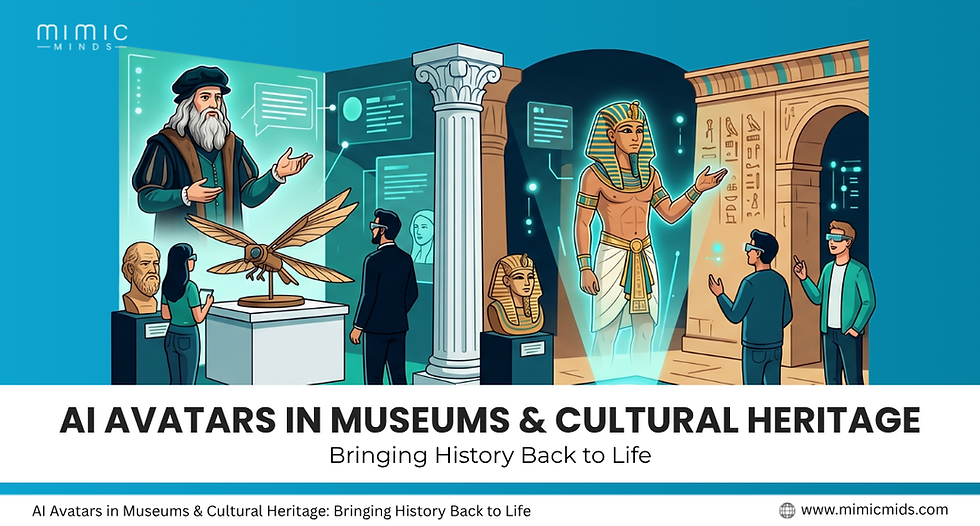
An AI holographic avatar succeeds at a trade show when it has a clear job. Decide whether the experience should attract visitors, explain a product, answer technical questions, qualify leads or guide people to a live specialist. Trying to do everything usually produces a slow and unfocused interaction. One primary goal helps the team select the right display, conversation flow and measurement plan.
Design the physical environment alongside the content. The display needs controlled lighting, suitable viewing angles, intelligible audio and enough floor space for people to stop without blocking the aisle. Provide captions or a parallel touch interface for accessibility and noisy environments. A visible privacy notice should explain whether conversations, contact details or analytics are being collected.
Build the knowledge base around the event. Product facts, demonstrations, schedules and approved claims should come from current sources. The avatar must recognize questions it cannot answer and transfer the visitor to the correct staff member. Multilingual interactions need testing with native speakers, especially for product names, technical terminology and lead details.
Rehearse the complete system under show conditions. Test weak connectivity, background noise, long queues, display restarts and staff handoffs. Keep an offline presentation or scripted mode available so the installation still provides value if a cloud service is unavailable. AI event avatars work best when automation supports the booth team rather than becoming a single point of failure.
Measure more than foot traffic. Track meaningful conversations, qualified handoffs, demo completion, consented leads and follow-up outcomes. Compare those results with staffing and production costs. This evidence helps teams decide whether to reuse the avatar across events, showrooms and permanent visitor experiences.
Assign one primary visitor outcome and a clear staff owner.
Validate sightlines, lighting, sound, accessibility and queue flow.
Ground answers in event-specific approved information.
Prepare offline content and a restart procedure.
Measure qualified conversations and follow-up, not only attention.
Continue the planning process with AI event avatars. For a complementary perspective, review conversational AI avatar services.
FAQs
What is the best display option for a holographic avatar at a trade show?
It depends on lighting and foot traffic. Transparent display rigs can look stunning but need controlled lighting. High brightness LED walls with strong staging often deliver better reliability in typical expo halls.
Do AI holographic avatars work in loud exhibition environments?
Yes, if you design for noise. Directional speakers, short prompts, and clear turn taking matter more than raw AI capability. Many teams also use a “step closer” moment to bring visitors into a defined audio zone.
How do you keep the avatar from saying the wrong thing?
Use a controlled knowledge layer, approved talk tracks, and safety rules that restrict unsupported claims. The goal is a helpful host, not an improviser.
Can a holographic avatar capture leads without feeling awkward?
Yes. The smooth approach is to earn permission after value, then ask for details with context. For example: “Want me to send the integration sheet and book a demo slot?”
How long does it take to create a trade show ready digital human?
Timelines vary by realism, content depth, and hardware staging. The biggest variable is not the model, it is scripting, brand approvals, and booth integration testing.
Should the avatar be photoreal or stylized?
Photoreal can feel premium but demands good lighting, animation quality, and careful voice casting. Stylized avatars can feel more approachable and are often more forgiving on show floors.
Can the same avatar be reused across multiple events?
Absolutely. That is one of the biggest ROI levers. You iterate the script, update knowledge, and re stage the presentation, rather than rebuilding the character.
How do you measure success beyond “cool factor”?
Track interactions per hour, qualification rates, lead capture quality, and meeting bookings. Also review the top questions visitors asked to refine messaging for the next show.
Conclusion
Trade shows are still one of the rare places where attention is concentrated and decisions happen fast. But the floor is crowded, noisy, and brutally competitive. If your booth experience depends entirely on human stamina and static screens, you are leaving outcomes to chance.
AI Holographic Avatars for Trade Shows & Exhibitions change the equation by giving your brand a consistent, on demand performer that can welcome, explain, qualify, and convert visitors at scale. When built with real production craft, a digital host becomes more than an attraction. It becomes a repeatable interface you can deploy across events, markets, and channels, without losing the human feel that makes people stop and engage.
For further information and in case of queries please contact Press department Mimic Minds: info@mimicminds.com


Comments