
AI Interview Practice: How to Prepare With AI Avatars


Could you explain your best work clearly if the next interview started today?
AI interview practice gives you a way to rehearse answers, hear follow-up questions and notice where your explanation becomes unclear. An AI avatar can add a visible conversation partner to that process. The useful part is the practice loop: answer a realistic question, examine the evidence in your response, make one improvement and try again.
This guide explains how to prepare a focused mock interview, work through a behavioral answer and review feedback without memorizing a script. It also covers what career coaches and education teams should plan before introducing an AI interview practice avatar. The photographs illustrate interview and coaching situations; they are not screenshots of a Mimic Minds product.
Table of Contents
What Is AI Interview Practice?

A useful rehearsal resembles a conversation with another person: someone asks a question, listens to the answer and asks for clarification. AI interview practice uses software to support parts of that exchange. Depending on the tool and its configuration, you may type responses, speak aloud or interact with a digital interviewer on screen.
The format should match the skill you want to improve. Text practice is convenient for organizing examples and checking whether an answer addresses the question. Voice practice adds the challenge of explaining your thinking aloud. An avatar adds a visible character, which may help you rehearse speaking to a screen instead of reading from notes.
A visible character does not automatically make a system conversational. A prerecorded presenter can introduce a question but cannot, by itself, adapt to your answer. Conversational AI avatars combine a digital character with an interactive experience. Our guide to real-time and prerecorded AI avatars explains why that distinction matters when choosing a format.
What should you expect from a practice session?
Start with concrete goals: give a clearer introduction, explain your contribution to a project, or respond to a follow-up without losing your point. Ask the system to focus on those goals. A friendly conversation with broad praise can feel encouraging while leaving the actual weakness in your answer untouched.
Treat automated comments as suggestions to examine. An AI interviewer does not know everything about your background, the employer or the hiring team's expectations. It may misread an answer or recommend a detail you cannot support. Keep your experience accurate, and ask a coach or trusted colleague to review important examples. Practice feedback cannot predict whether you will receive an offer.
How to Prepare and Run an AI Mock Interview

Prepare as you would for a conversation across a desk. Read the job description, identify the main responsibilities and select real examples that demonstrate relevant skills. Google's interview preparation guide also emphasizes understanding the role and researching the employer before rehearsing. Use verified information from the employer rather than asking AI to invent its priorities.
Build a small bank of truthful examples
Choose four or five situations you can discuss in detail: a difficult deadline, a disagreement, a mistake, a problem you solved and something you learned. For each, note the context, your responsibility, the action you took and the outcome. A student can use coursework, volunteering or a personal project. A career changer can explain a transferable skill from a different industry.
Remove confidential information before entering material into a tool. Replace customer names and private project details with neutral descriptions. Check whether the service stores conversations, who can access them and what deletion controls are available. You usually need a description of the task and your contribution, not an unedited internal document or a full personnel record.
Give the interviewer a clear brief
Specify the role, experience level, interview stage and skill you want to rehearse. Ask for one question at a time and a relevant follow-up when your answer is vague. Decide whether feedback should arrive after each response or at the end. Immediate feedback suits a focused exercise; a short uninterrupted session is useful when practicing conversational flow.
Try this adaptable prompt: “Act as a mock interviewer for an entry-level customer success role. Ask five questions, one at a time. Focus on explaining a problem, prioritizing work and communicating with customers. Wait for my answer. Ask a follow-up if my contribution is unclear. After the session, identify two specific improvements using examples from my responses. Do not invent experience or predict a hiring outcome.”
In a configured avatar experience, the same brief can guide the scenario designer. Confirm which controls are available rather than assuming every product accepts a free-form prompt. Use the actual device, microphone and language you expect to practice with, and test whether the system gives you enough time to finish a thought.
Work through a behavioral answer using STAR
STAR stands for Situation, Task, Action and Result. It gives your answer a sequence while keeping attention on what you did. The following example is fictional and illustrates structure; it is not a customer case study or an answer to copy into your own interview.
Practice question: “Tell me about a time you had to resolve a problem under a deadline.” A vague first attempt might be: “Our project was behind schedule. I worked hard, communicated with everyone and we got it done.” That response mentions effort but leaves the listener guessing about the problem and your responsibility.
A more specific version: “Two days before a student event, our registration spreadsheet contained duplicate entries. I was responsible for checking the attendee list. I compared the entries with confirmation emails, asked the organizer to resolve the uncertain cases and marked verified records so the check-in team could use one list. We opened registration with the corrected list. For the next event, I proposed a single submission form to reduce duplicate entry.”
Notice the improvement: a defined problem, a clear responsibility, observable actions and an honest result. There is no invented percentage or exaggerated claim. If you have reliable measurements from your own experience, include them. If you do not, describe a concrete outcome you can defend.
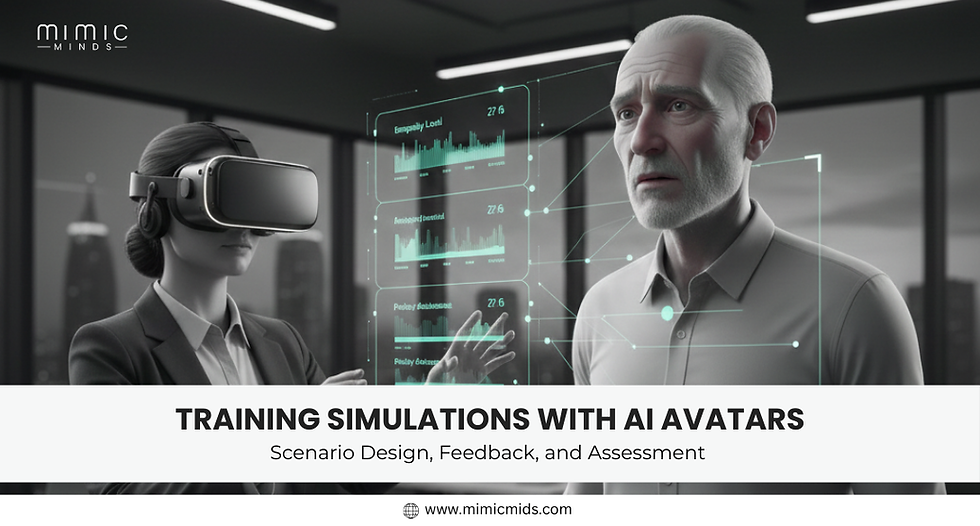
Now ask for a follow-up such as “How did you decide which records needed checking first?” or “What would you do differently?” Answer without restarting the entire story. This is where an interactive rehearsal becomes more useful than simply reading a prepared paragraph. The same scenario-and-retry approach appears in training simulations with AI avatars.
How to Review Feedback and Improve Your Next Answer

Review the response as you would review notes with a coach: identify the part that needs work and agree on a practical change. Avoid treating a numerical score as an objective measure of your ability. Feedback is most useful when it points to something in the answer that you can inspect and revise.
Use five questions to assess the answer
Relevance: Did I answer the question asked, or move to a story I preferred?
Specificity: Can the listener identify the situation, my responsibility and the decisions I made?
Evidence: Did I explain an actual result without inventing numbers or claiming someone else's contribution?
Structure: Is the sequence easy to follow, with enough context but no long detour?
Clarity: Could someone unfamiliar with my organization understand the words and examples?
Ask the AI to quote or identify the part of your answer behind each comment. If it says “be more specific,” ask which decision or action needs explanation. If it recommends adding a result, check your own records or memory before revising. A polished answer that changes the facts is a worse rehearsal outcome than an imperfect answer you can explain honestly.
Repeat one part instead of rewriting everything
Choose one improvement for the next attempt. You might shorten the background, replace jargon, separate your work from the team's work or state the outcome more clearly. Answer again from a few bullet points. Keep the meaning consistent while allowing the wording to change. This builds flexibility for an unfamiliar question instead of dependence on a memorized script.
A manageable practice session might use five minutes to choose the role and examples, ten minutes for questions, five minutes to review and five minutes for a second attempt. This is a suggested routine, not a proven optimum. Stop when you can name the change you made. On another day, test the same skill with a different question.
If recordings or transcripts are available and you have chosen to retain them, compare your own attempts. Otherwise, keep a brief practice log: question, missing detail, next change. Ask a person to review at least one session before an important interview. For practice in another language, consider the communication goals discussed in our multilingual AI avatars guide, and confirm language support for the chosen experience.
Planning Avatar Interview Practice for Learners and Coaches

Career coaches, universities and learning teams can use a repeatable practice experience alongside human guidance. The starting point is a learning goal shared by the learner and coach: explain an example clearly, respond to a challenge or ask a thoughtful question. An attractive digital interviewer is only one part of that experience.
For a pilot, select one audience and a small set of scenarios. Define the interviewer's role, the questions it may ask, the follow-ups it should use and the feedback learners should receive. Give people a clear way to pause, retry or ask for human help. Our article on AI avatars for education provides related context for learning experiences.
Choose the character and tone around the learning task. A welcoming interviewer may suit a first practice session, while a more probing scenario can help experienced candidates explain tradeoffs. The Mimic AI Studio personas guide can help frame that discussion. Appearance should support the scenario; it should not substitute for appropriate questions and useful feedback.
Before a wider rollout, test turn-taking, microphone behavior, accessibility needs and how the experience handles incomplete or unexpected answers. Confirm whether recording, transcripts, progress tracking or integrations are included in the proposed implementation. Have coaches review feedback samples for accuracy and relevance. Judge the pilot by observable practice outcomes rather than unsupported claims about hiring success.
Keep the purpose clear to learners. Interview preparation helps someone rehearse; employer assessment informs a hiring process and carries different expectations. Our discussion of AI interviewer avatars for candidate screening addresses that separate context. For a Mimic Minds project, agree on the practice scope, content and review process before selecting delivery features.
Frequently Asked Questions
How do I start AI interview practice?
Choose one role and one skill to practice. Gather a few truthful examples, then ask for one question at a time. Answer aloud if speaking is your goal. Review one specific weakness and repeat the answer with that improvement, rather than trying to perfect an entire interview in one session.
What is the difference between an AI mock interview and an avatar interview?
An AI mock interview describes the practice activity. It can use text, audio or other interfaces. An avatar interview adds a visible digital character. Whether it responds dynamically, asks follow-ups or provides feedback depends on the system and its configuration, not simply on the presence of an avatar.
Can AI interview practice help beginners or students?
It can provide a setting for rehearsing introductions and explaining examples before speaking with another person. Beginners can draw on study, volunteering or personal projects. Start with straightforward questions and use human feedback to check whether the answer is understandable and appropriate for the role.
Should I use the STAR method for every question?
Use STAR when a question asks about a past situation or behavior. A brief introduction, technical explanation or question about motivation may need a different structure. Match the answer to the question instead of forcing every response into four labeled parts.
How accurate is AI interview feedback?
Accuracy varies with the system, the information provided and the question. Treat feedback as a draft for review. Ask which part of your response supports the comment, check factual suggestions and involve a coach for important decisions. An automated score is not a reliable prediction of a job offer.
How often should I practice before an interview?
There is no single schedule that suits everyone. Use short sessions with a clear goal and leave time to review. Repeat weak answers, vary the questions and include a practice conversation with a person. More repetition helps only when you are making useful changes rather than repeating the same script.
Can I practice interviews in another language?
Some tools support multiple languages, but availability and quality differ. Confirm the specific language, speech recognition and feedback options before choosing a tool. Practice explaining your experience clearly, and ask a fluent speaker or coach to review important terminology and cultural context.
Can Mimic Minds help build an interview practice avatar?
Mimic Minds presents interview practice avatars as a solution to discuss around your audience and goals. Bring your scenarios, questions, feedback expectations and delivery requirements to the team. Confirm the supported features and implementation scope before assuming that recording, grading or integrations are included.
Conclusion
Good AI interview practice turns a broad goal—feeling prepared—into a small, repeatable task. Choose a realistic question, explain a truthful example, inspect the weak point and answer again. An avatar can provide a visible partner for that rehearsal, while a coach or trusted colleague adds perspective that automated feedback may miss.
The aim is to know your experience well enough to adapt when the conversation changes. Keep the facts accurate, practice follow-ups and take a few thoughtful questions of your own into the real interview.
Explore Mimic AI Studio or contact Mimic Minds to discuss an avatar interview practice experience for your learners.


Comments